What a Conversation with a Mixed-Heritage Friend Taught Me About Japan’s Shinto Sensibility
The other day, I had a conversation with a mixed-race friend that made me think about something.
It made me wonder whether the “Shinto-like sensibility” that many Japanese people grow up with might slowly be fading away.
You might wonder what I mean by that.
After all, most Japanese people don’t consciously think about Shinto in their daily lives.
The conversation started when someone said,
“Girls usually like receiving stuffed animals as gifts.”
I replied that in Japan, because of the animistic idea that spirits can dwell in objects, giving a stuffed animal to a woman over twenty might not always be the best choice.
The response I got was simple:
“I don’t really have that kind of spiritual belief.”
But for many Japanese people, this idea doesn’t feel particularly spiritual.
It’s just something that feels natural.
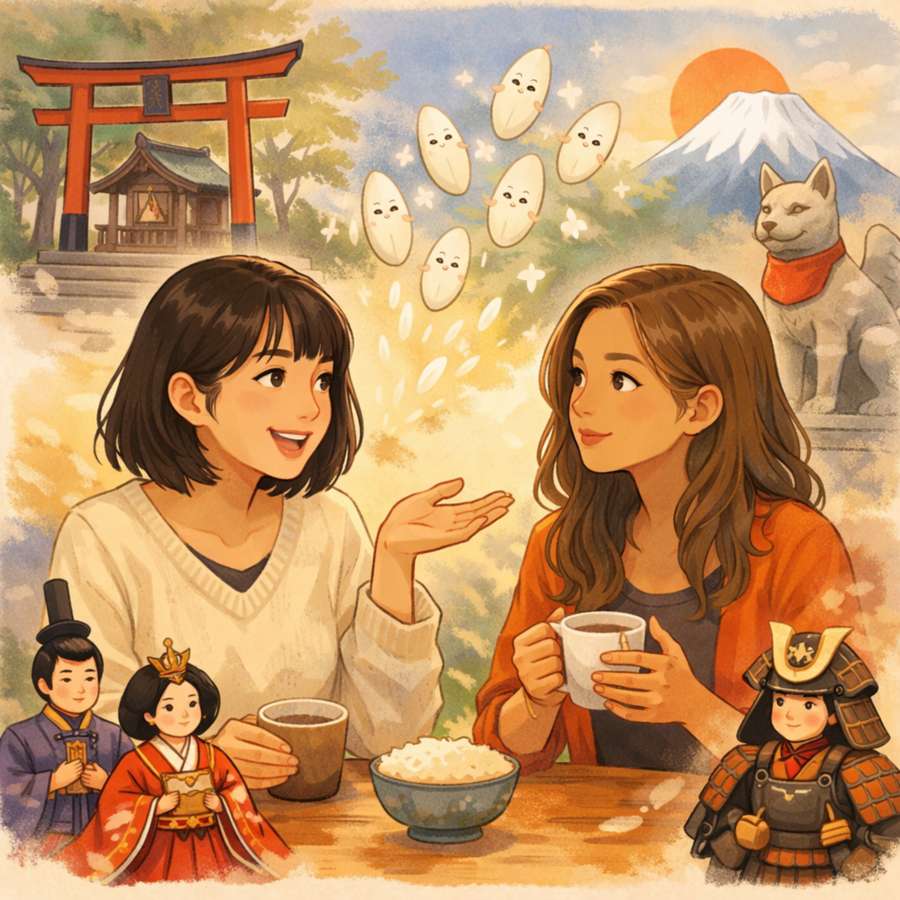
Interestingly, there’s a moment in everyday life where many Japanese people first encounter this way of thinking: when eating rice.
Many of us grow up being told that a god lives in every single grain of rice, and that leaving rice uneaten might bring bad luck.
That’s why people try to finish every last grain stuck to the bowl.
However, when I mentioned this after the stuffed animal conversation, the reaction was surprise.
It was apparently the first time they had ever heard such a story.
Since the person I was talking to was Christian, it’s possible that their Japanese mother never passed on this kind of cultural idea.
Or perhaps she intentionally avoided teaching it so her child could better adapt to the society they were growing up in.
For Japanese people, Shinto rarely feels like a strict religion.
It’s more like a quiet layer of values that exists naturally in everyday life.
Because of that, it might also be something that can disappear without anyone really noticing.
Still, the thought felt a little sad to me.
After all, this way of thinking is closely connected to the Japanese attitude of treating objects with care.
In Japan, when a child is born, families often buy a doll that symbolically takes on misfortune in place of the child.
For girls, it’s a hina doll.
For boys, it’s a samurai doll displayed during Children’s Day.
Without the idea that objects can hold a spirit, people from other cultures might simply look at photos of these dolls and say things like:
“That’s cute.”
“That’s beautiful.”
“That looks a bit scary.”
“It looks like a samurai.”
But Japanese families are willing to spend a significant amount of money on these dolls.
Somewhere deep down, many people believe that these dolls will protect their children.
That belief is part of what keeps this tradition alive.
Personally, I only visit shrines during the New Year holidays.
But through this conversation, I realized that for some mixed-heritage people, the cultural thread connecting them to Japanese traditions can easily be lost.
It was a surprisingly fresh realization—and one that left a faint feeling of unease somewhere deep inside me.
ハーフの友人との会話で気づいた、日本人の神道的な感覚
この間、ハーフの人と話していて、ちょっと気になったことがあった。
それは、日本人の中で少しずつ「神道的な感覚」が薄れているのかもしれない、ということ。
何のこと?と思うかもしれない。実際、日本人って普段の生活の中で神道を意識していることはほとんどないからだ。
これを感じたのは、ある会話がきっかけだった。
「女の子にはぬいぐるみをプレゼントするといいよ」と言われたときのこと。
私は、日本では物に魂が宿るというアニミズムの感覚があるから、20歳を過ぎた女性にぬいぐるみをプレゼントするのはあまりおすすめできない、という話をした。
すると返ってきたのは、「そんなスピリチュアルな考え方は持っていないよ」という言葉だった。
でも、私たちにとってこれは特別スピリチュアルな話ではなくて、わりと当たり前の感覚なんだよね。
日本人がこういう感覚を教えられる場面って、意外なところにある。
それは、ご飯を食べるとき。
私たちは「お米一粒一粒に神様がいるから、食べ残すと罰が当たる」と教えられて育つ。
だから茶碗にくっついた最後の一粒まで、ちゃんと食べようとする。
でも、ぬいぐるみの話のあとにこの話をしたら、「そんな話は初めて聞いた」という反応だった。
相手がキリスト教徒だったこともあって、日本人のお母さんがこういう日本的な考え方を伝える機会がなかったのかもしれない。
あるいは、子どもが現地社会にうまく馴染めるように、あえて神道的な考え方を教えなかったのかもしれない。
日本人にとって神道って、強い宗教というより、生活の中に自然にある感覚みたいなものだから、意識しないまま伝わらなくなることもあるのかもしれない。
でも、この感覚がなくなっていくのは、ちょっと寂しい気もした。
というのも、こういう考え方って、日本人が物を大切にする感覚につながっていると思うからだ。
日本では、子どもが生まれたとき、その子に降りかかる厄の身代わりになってくれる人形を買う習慣がある。
女の子なら雛人形、男の子なら五月人形。
それぞれ3月と5月に飾る風習がある。
でも、物に魂が宿るという感覚がなければ、外国の人に写真を見せても
「かわいいね」
「きれいだね」
「ちょっと怖い」
「侍みたい」
というような見た目の感想しか出てこない。
それでも日本人は、決して安くないこの人形を買う。
人形が子どもたちを守ってくれると、どこかで信じているからこそ、この文化が続いているんだと思う。
神社に行くのは初詣のときくらいの私だけれど、今回の会話を通して、混血の人の中には日本文化の感覚が途切れてしまうこともあるんだと知った。
それは新鮮でもあり、少しだけ心の奥がざわざわするような体験だった。
Choose Your Quiz/クイズを選んでね

The list below also includes pronunciation symbols for English words and idioms.
以下の一覧には英単語とイディオムの発音記号も含まれています。

コメント